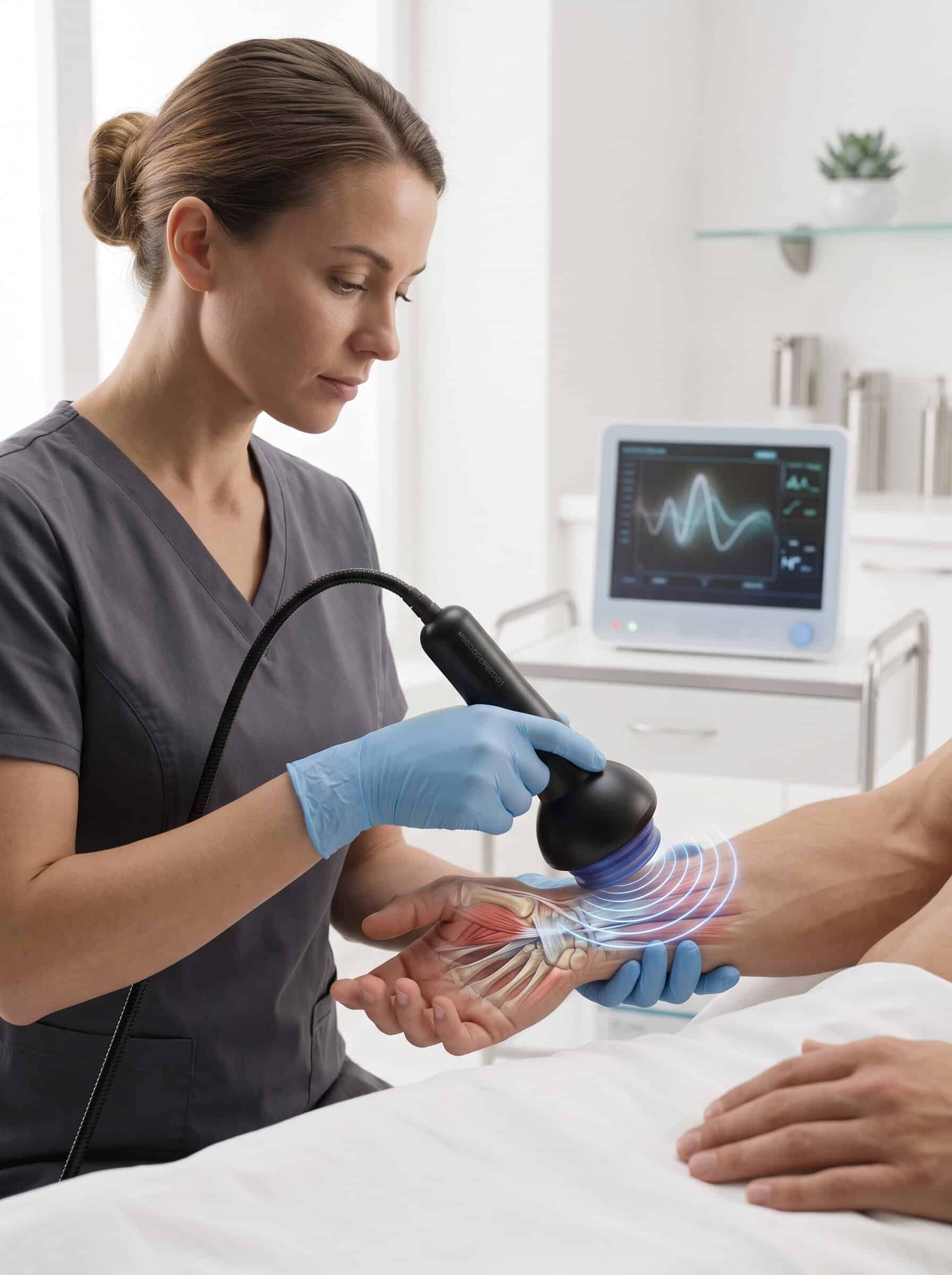


Plenty of practices buy the machine and then figure out the rest. Some of them do fine. Many end up with a capable device sitting idle because the practice around it was not set up to run it well.
The buying decision gets most of the attention, but the readiness decision is what actually predicts whether the service works. Readiness is not about whether acoustic wave therapy is worth it in the abstract. It is about whether your specific practice, as it runs today, can support the service from day one. This checklist walks through the six dimensions that decide that, so you can see where you already stand and what to shore up before you sign anything.
Key Takeaways
- Readiness is separate from the economics. The question here is not whether it pays. It is whether your practice can actually run it well.
- Six dimensions decide it. Physical space, financial footing, patient base, staffing and operator scope, schedule capacity, and cash-pay readiness.
- Who can legally operate it is state-specific. Scope of practice is set by your state board and practice act, not by the device’s FDA classification, and it varies by profession.
- A patient base that fits matters more than raw volume. The service needs patients it genuinely suits, not just a full waiting room.
- Schedule headroom is the quiet dealbreaker. A service with nowhere to fit in the day goes cold fast.
- Cash-pay capability is its own muscle. Practices that already run cash-pay services adopt it faster than those built entirely on insurance billing.
- Gaps are fixable. Most readiness gaps can be closed before purchase. The point is to find them first.
How To Use This Checklist
Each dimension below describes what ready looks like, with concrete signals you can check against your own practice. Few practices start fully ready on all six, and that is fine. The value is seeing which boxes you already check and which need work before the machine arrives, not after.
Physical Space
The device needs a home, not a cart that drifts between rooms. Sessions are short, so the footprint is modest, but the service still needs a dedicated, private, accessible spot to run consistently.
You are ready on space when you can answer yes to these:
- A treatment room or dedicated area the device can live in, rather than being set up and torn down each time.
- Standard power and the room to position the device and operator comfortably around the patient.
- Enough privacy for the patient to be comfortable during treatment.
If every room is already booked solid, that is not a space problem. It is a schedule problem, and it shows up again in dimension five.
Financial Footing
A clinical acoustic wave therapy machine is a capital purchase. Public pricing for professional systems runs from the mid five figures upward depending on type and configuration. Readiness here is not about having the cash on hand, since financing and leasing are common. It is about being on stable enough footing to carry the commitment while the service ramps.
You are ready financially when:
- You can absorb the purchase or a monthly lease payment without straining the practice during the ramp period.
- You have a realistic view of the payback timeline for your volume, which the return math and the solo and small-practice payback breakdown both lay out.
- You are buying on total cost and support, not sticker price alone, which the guide to choosing a machine
A Patient Base That Fits
The most common reason a new service stalls is not a bad device. It is a patient base that does not match what the device does. Readiness here means you already see enough of the right patients for the service to have somewhere to go from week one.
You are ready on patient fit when:
- A meaningful share of your current patients present with the kinds of concerns this modality addresses.
- Those patients are candidates you could offer it to as an add-on to visits they already book, rather than demand you have to create from scratch.
- Your patients are open to a cash-pay option, which connects directly to dimension six.
A practice with the right patients and modest volume is readier than a busy practice whose patients are a poor fit. Patients are already searching the category. See Demand For Acoustic Wave Therapy Is Climbing for that side.
Staffing And Operator Scope
This dimension has two parts: do you have the people, and are they allowed to run it.
On capacity, you need at least one team member who can own the device, learn it well, and deliver sessions consistently. A designated operator who coaches the rest of the team keeps competency from resting on one person. The ramp-up side of this is covered in the first 90 days after install.
On scope, this is where practices most often assume rather than check. Who may legally deliver acoustic wave therapy is governed by your state licensing board and practice act, and it varies by both state and profession. It is not determined by the device’s FDA classification, which describes the device, not who operates it. In some states and professions the treatment sits clearly within scope. In others the rules around delegation to trained staff or technicians under supervision are more restrictive. Before you buy, verify three things:
- That the treatment falls within your profession’s scope of practice in your state.
- Whether you may delegate delivery to staff, and under what supervision, or whether a licensed provider must perform it.
- What training or certification your state or your malpractice carrier expects for whoever operates it.
This is a question for your state board and your own counsel, not a blog post, and none of the above is legal advice. The point is to confirm it in writing before the device arrives, not after. One state association’s view of the question for chiropractors is the Association of New Jersey Chiropractors piece. It is an example of how a board-level discussion is framed, not a national rule.
Schedule And Workflow Capacity
Sessions are short, but short is not the same as free. The service needs a place in the day and a place in the workflow, or it gets squeezed out by everything already on the calendar.
You are ready on schedule when:
- There is genuine room in the day to add sessions without cannibalizing existing appointments.
- The service has a defined slot in your scheduling and intake flow, not a “we will fit it in” plan.
- Someone owns booking the follow-up before the patient leaves, because a recurring treatment depends on continuity. See how to introduce acoustic wave therapy to your patients for that conversation.
Cash-Pay Readiness
Acoustic wave therapy is almost always a cash-pay service, since most insurers treat it as elective. Practices that already run cash-pay offerings have the muscle for this. Practices built entirely on insurance billing can absolutely add it, but they are learning a new motion at the same time as a new device.
You are ready on cash-pay when:
- You already collect payment directly from patients for at least some services, or you are prepared to build that capability.
- You have a view of how you will structure pricing, whether single sessions, packages, or memberships, which the revenue models breakdown walks through.
- Your team is comfortable discussing cost with patients rather than avoiding it.
For how that cash-pay line is usually built in one specialty, see Unlocking Cash-Pay Revenue for Chiropractic Clinics.
Reading Your Results
Count the dimensions where you can honestly check most of the boxes.
Strong on all six, and you are ready to move on the purchase decision itself. Strong on four or five, and you are close, with a clear short list of what to fix first, usually scope confirmation or schedule planning. Strong on three or fewer, and the machine is not the next step. The next step is closing the gaps, because buying ahead of readiness is how a capable device ends up idle.
None of these gaps are permanent. They are a pre-purchase to-do list, and working through them before you buy is what separates a service that runs from day one from one that struggles to get off the ground.
Frequently Asked Questions
Do I Need A Dedicated Room For Acoustic Wave Therapy?
A dedicated, private space, yes, but not necessarily a whole room built for it. Sessions are short and the footprint is modest, so a treatment room the device can live in is usually enough.
Who Is Legally Allowed To Operate The Machine?
That depends on your state and your profession. Scope of practice is set by your state licensing board and practice act, not by the device’s FDA classification. Confirm with your board, and your counsel, before you buy. This is not legal advice.
Can My Existing Staff Run It, Or Do I Need To Hire?
Most practices run it with existing staff, provided state rules permit delegation and the operator is properly trained. Designate one team member to own the device and coach the rest.
How Much Space And Setup Does It Really Take?
Little. A treatment area, standard power, and a trained operator. Sessions are short enough to slot into an existing schedule without a buildout.
What If I Am Ready On Most Dimensions But Not All?
That is the normal starting point. Treat the gaps as a short pre-purchase to-do list, close the critical ones, usually scope and schedule, and move when they are handled.
When You Are Ready
Readiness is a checklist you can work through, and most practices can close the gaps faster than they expect. The part that is hardest to build alone is everything that surrounds the device: the operator training, the workflow, the patient demand, and the cash-pay motion.
OmniWave builds focused acoustic wave systems for human clinical practice and treats the device as the start of a partnership rather than the end of a sale. That includes the training, the workflow, and the help filling the schedule so the machine does not sit idle while the practice figures the rest out.
If you are still on the buying criteria, start with How to Choose the Best Focused Wave Therapy Machine for Your Practice. When you want the readiness gaps mapped to your team, Book A Call.

